Buying a Home With a Septic System Near Louisville: A Practical Guide

Buying a Home With a Septic System Near Louisville: A Practical Guide
Summary answer: Buying a home with a septic system means taking responsibility for wastewater treatment on your property. Unlike public sewers, septic systems need their own inspections, periodic pumping, maintenance and repair budget. Before closing, review the records, locate the tank and drain field, confirm the system’s approved capacity, arrange a septic evaluation and understand your options for future replacement.
A little more land. A quieter road. Room for a garden, a workshop or simply some space between neighbors.
If that is what you are looking for outside Louisville, septic deserves a place on your homebuying checklist. Whether you are considering Oldham, Shelby, Spencer, Bullitt or Nelson County, the goal is to understand how the property works before it becomes yours.
How does a septic system work?
A conventional septic system sends household wastewater into an underground tank. Solids settle, while liquid flows into a drain field, also called a lateral or leach field, where soil provides further treatment. Some properties have systems with pumps or other treatment components. EPA: How Septic Systems Work
That means the tank is only part of the picture. The surrounding soil and the drain field matter, too.

What should buyers check in counties near Louisville?
Start with the specific address. A county name, rural setting or nearby sewer line does not establish whether a home is connected to public sewer.
| County | Areas to consider | Questions to ask about the property |
|---|---|---|
| Oldham | La Grange, Crestwood and Goshen | Where are the existing system and any replacement area relative to planned improvements? |
| Shelby | Shelbyville, Simpsonville and surrounding countryside | Does the approved system capacity match the home’s current use and your plans? |
| Spencer | Taylorsville and areas near Taylorsville Lake | Have site conditions and wastewater approvals been documented? |
| Bullitt | Mt. Washington, Shepherdsville and rural acreage | Is the home connected to sewer or served by an onsite system? Verify directly. |
| Nelson | Bardstown, Bloomfield and surrounding rural properties | Are installation records available, especially for older homes or additions? |
In Kentucky, the Cabinet for Health and Family Services’ Onsite Sewage Disposal Systems Program operates through local health departments. Their inspectors evaluate site and soil suitability and perform regulatory inspections. Contact the department serving the property early to ask about available records and the process for evaluating an existing system. Kentucky onsite sewage program
If you are also considering vacant acreage, read 5 Mistakes to Avoid When Buying Land in Kentucky. Wastewater suitability belongs in your research before you commit to a building plan.
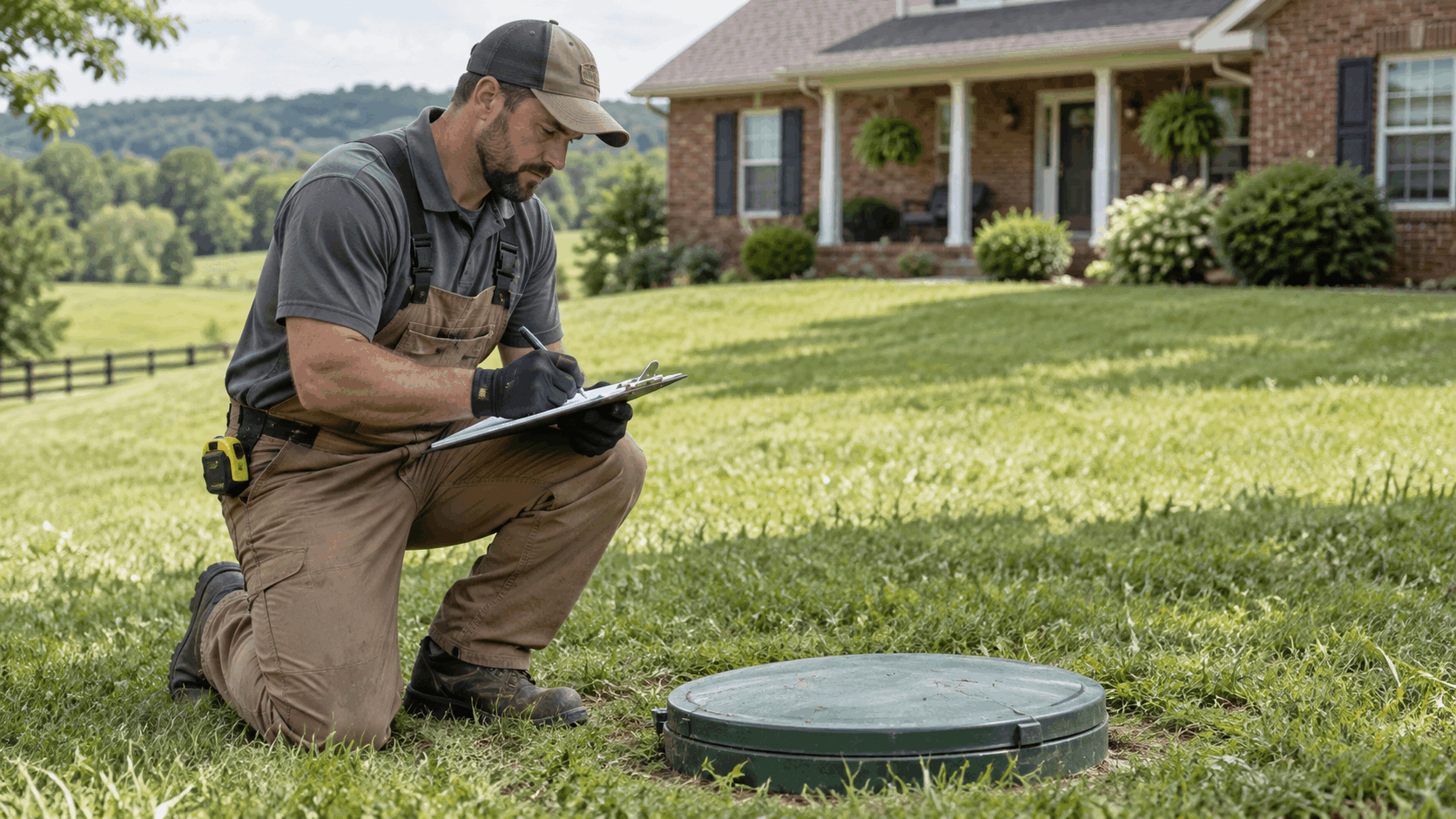
Who inspects a septic system before you buy?
Arrange an evaluation with a qualified septic professional who works with the system type at the property. Ask the local health department which existing-system services it provides and how to find appropriate professionals.
A general home inspection may exclude the septic system or cover only limited observations. Confirm the scope in writing.
Ask your septic evaluator:
-
Will you review permits and maintenance records?
-
Which tanks and components will you access?
-
How will you evaluate the drain field?
-
Are pumps, alarms and controls included?
-
Will the report explain defects, inaccessible components and recommended follow-up?
A pumping receipt documents service; it does not establish the condition of the entire system. Coordinate any pumping with the evaluator so the inspection follows their preferred sequence. EPA septic inspection guidance
For the broader inspection process, see The Louisville Home Inspection: What Buyers Should Know Before Closing.
What belongs on a septic homebuying checklist?
Use this checklist when reviewing disclosures, gathering records and planning inspections.
| Checklist item | What to request or verify | Why it matters |
|---|---|---|
| Records | Available permits, installation plans, pumping receipts, repairs and prior inspection reports | Helps establish system history and identify unanswered questions |
| Tank location | Location of every tank, access lid and service route | Makes inspection and future maintenance easier |
| Drain field | Location, visible condition and any structures or vehicle traffic over it | Helps protect the treatment area and assess potential conflicts |
| Capacity | Approved design capacity and bedroom count, where documented | Helps evaluate whether current use or proposed additions need further review |
| Inspection | Written findings, inspection scope and limitations | Gives you information to evaluate before closing |
| Future replacement | Any designated repair area, site constraints and approval process | Helps you plan beyond the current tank’s condition |
Treat missing records as a reason for more investigation. Ask what can be verified through the health department and what requires further evaluation.
Example: If a listing describes four bedrooms but the available septic approval references three, resolve that difference before relying on the fourth bedroom for your household. Do not assume the listing description establishes wastewater capacity.
How often should a septic tank be pumped?
The U.S. Environmental Protection Agency recommends pumping most household septic tanks every three to five years. The actual interval depends on tank size, household size, wastewater volume and accumulated solids.
The EPA also recommends inspecting a typical household system at least every three years. Systems with pumps, electrical controls or mechanical components generally need more frequent inspections, often annually. Follow the maintenance schedule recommended for your particular system. EPA septic maintenance guidance
Before closing, ask when the tank was last pumped and request the service report. After moving in, keep those records together and schedule the next service.
What happens if the septic system fails?
A failure can involve a component repair, a damaged tank or a drain field that no longer functions properly. Pumping alone may not resolve the underlying problem.
Warning signs include sewage backups, slow drains, gurgling plumbing, odors and persistent wet or unusually lush areas around the system. These symptoms need professional evaluation; they do not identify the cause by themselves.
If sewage backs up or surfaces, avoid contact and call a septic professional and the local health department for guidance. EPA: Resolving Septic System Malfunctions
If a problem is found during the purchase:
-
Get written findings explaining what is known and what needs further evaluation.
-
Confirm the repair approach and required approvals with the appropriate professionals and permitting authority.
-
Request a written estimate covering the proposed work.
-
Review timing and financing implications with your agent and lender.
-
Address the issue within your contract deadlines. Available options depend on the agreement; do not assume an automatic right to cancel or a requirement that the seller pay.
Kentucky uses site evaluations to determine suitable onsite wastewater systems. A replacement plan should account for the property’s actual conditions and approvals. Kentucky onsite sewage program
How much should you budget for septic ownership?
Build your budget from local quotes for the specific system. A routine pumping bill and a replacement estimate cover very different work.
| Budget category | What to ask the provider |
|---|---|
| Purchase evaluation | Does the fee include locating, accessing and evaluating the necessary components? |
| Routine pumping | Are digging, access difficulties or extra tanks additional charges? |
| Ongoing service | Does the system need a service contract, electrical power or periodic component maintenance? |
| Repairs | What work is recommended now, and what can be monitored? |
| Future replacement | Does the estimate include evaluation, design, permits, installation and yard restoration? |
Ask for separate figures for immediate work and future planning. An older system deserves careful budgeting, but age alone does not tell you its condition or establish a replacement date.
Can you add a bedroom, pool or detached building?
Check before making plans. Ask the health department whether an added bedroom or additional wastewater use requires a capacity review or system changes.
Locate the existing drain field and any replacement area before planning a pool, garage, driveway or workshop. The EPA advises against driving or parking over drain fields and recommends checking with the permitting authority before building there. EPA drain field guidance
A large yard does not automatically mean every part of it is available for construction.
How do you care for the system after moving in?
Keep the maintenance routine simple:
-
Follow the recommended inspection and pumping schedule.
-
Fix leaking toilets and faucets.
-
Spread laundry loads throughout the week.
-
Flush only human waste and toilet paper.
-
Keep grease and inappropriate chemicals out of drains.
-
Protect the drain field from vehicles and excess stormwater.
These habits help reduce stress on the system. EPA septic care guidance
Looking for a home with more space near Louisville?
A septic system can be a manageable part of homeownership when you understand its condition, capacity and maintenance needs.
The Rhonda Roberts Group helps buyers explore homes and acreage in Louisville and surrounding counties, with attention to the details that affect everyday ownership.
Contact us for a search focused on rural homes in Oldham, Shelby, Spencer, Bullitt or Nelson County.
Recent Posts





GET MORE INFORMATION