
The Psychology of Selling Your Louisville Home, Part 2: Why Some Homes Get Offers While Others Sit

A buyer walks through your home.
They look around.
They compliment the kitchen.
They love the backyard.
They say the house is beautiful.
And then...
Nothing.
No offer.
No second showing.
No phone call.
Meanwhile, another home down the street seems to receive an offer almost immediately.
So what happened?
Sometimes, the problem isn't that buyers don't like the house.
It's that something is stopping them from taking the next step.
Welcome to Part 2 of our series on The Psychology of Selling Your Louisville Home.
In Part 1, we talked about what makes buyers emotionally connect with a property.
Now we're looking at the other side of the equation:
What makes buyers hesitate?
Table of Contents
- Buyers Are Looking for Reasons to Say "Yes" AND "No"
- The Price Creates the First Reaction
- Small Problems Can Become Big Concerns
- Buyers Compare Your Home to Everything Else
- Days on Market Can Change Buyer Psychology
- Too Much Room for Negotiation Can Work Against You
- Why Multiple Offers Create Urgency
- Feedback Isn't Always What It Seems
- When Should a Seller Change Strategy?
- The Difference Between Interest and Action
- Frequently Asked Questions
- The Bottom Line
1. Buyers Are Looking for Reasons to Say "Yes" AND "No"
When buyers walk through your home, they're usually doing two things simultaneously.
They're looking for reasons to love it.
And they're looking for reasons not to buy it.
Think about that for a moment.
A buyer might walk into your kitchen and think:
"I love this."
Then they walk into the basement and think:
"I'm not sure about this."
They might love the neighborhood but question the price.
They might love the floor plan but worry about the roof.
They might love the house but wonder whether they can afford the monthly payment.
Every concern creates friction.
And the more concerns a buyer has, the harder it becomes to move from:
"I like it."
to:
"Let's write an offer."
2. The Price Creates the First Reaction
Before buyers ever see your home, they've already formed an opinion about it based on the price.
That's why pricing is about more than determining what you want to make from the sale.
It's about understanding how buyers perceive the value.
Imagine two similar Louisville homes.
Home A
Listed at $425,000
Home B
Listed at $475,000
If the homes are similar in location, size, condition, and features, buyers are going to ask:
"Why does Home B cost $50,000 more?"
If the answer isn't obvious, buyers may simply skip it.
That's why a home can be beautifully maintained and still struggle to attract offers.
Sometimes the price is creating the problem before the buyer ever walks through the door.
3. Small Problems Can Become Big Concerns
Remember the pre-listing preparation we discussed in our previous seller blog?
"7 Things Louisville Sellers Should Do Before Putting Their Home on the Market."
We talked about fixing the little things you've been ignoring.
There's a reason.
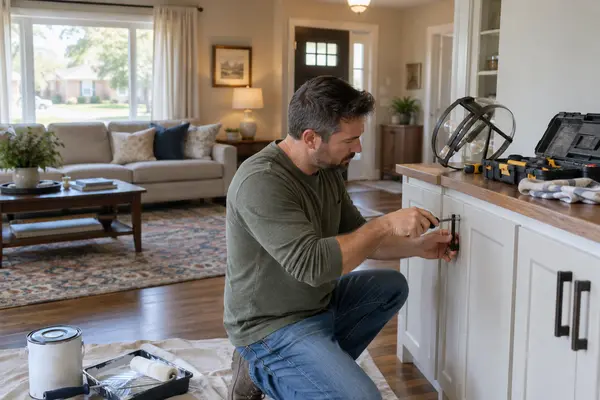
A buyer may see a loose cabinet handle and think:
"That's easy to fix."
But another buyer may see:
"What else hasn't been maintained?"
One small issue may not matter.
But several small issues can create a bigger psychological impression.
Buyers may begin wondering:
- Has the home been maintained?
- What will the inspection reveal?
- How much will I have to spend?
- Is there something I'm not seeing?
- Is the seller hiding something?
The issue isn't always the repair itself.
It's the uncertainty it creates.

4. Buyers Compare Your Home to Everything Else
Your home doesn't exist in a vacuum.
Buyers may be looking at:
- Five other homes this weekend
- Ten homes online
- Recently sold properties
- New construction
- Homes in nearby neighborhoods
- Properties at different price points
That's why sellers sometimes say:
"But my house is nicer than that one!"
Maybe it is.
But buyers aren't comparing your home only to what you think is comparable.
They're comparing it to the alternatives available to them.
This is where positioning becomes extremely important.
Your home needs to make sense within the choices a buyer has.
5. Days on Market Can Change Buyer Psychology
Here's an interesting thing about buyers:
They notice how long a property has been available.
A newly listed home can create a feeling of:
"We need to take a look before someone else gets it."
A home that's been sitting for a long time can create a very different reaction:
"Why hasn't anyone bought it?"
And then buyers may begin looking for answers.
Maybe it's overpriced.
Maybe something is wrong.
Maybe the seller is difficult.
Maybe the house isn't as desirable as it appears.
None of those assumptions may be true.
But perception matters.
The longer a home sits, the more important it becomes to understand why.
6. Too Much Room for Negotiation Can Work Against You
It may seem logical to price a home high and leave plenty of room to negotiate.
But there's a potential problem.
If the price is too far above what buyers perceive as market value, some buyers may never make an offer.
They simply move on.
You can't negotiate with someone who never schedules the showing.
This is why the goal isn't necessarily:
"Start high so we have somewhere to come down."
Instead, consider:
"What positioning gives us the best opportunity to attract serious buyers?"
That answer depends on the property, competition, market conditions, and your goals.
7. Why Multiple Offers Create Urgency
Now let's flip the situation.
What happens when several buyers want the same property?
Psychology changes.
A buyer who was previously thinking:
"Maybe we should think about it."
may suddenly think:
"If we don't act, someone else will buy it."
Competition can create urgency.
That's one reason properly positioning a home can be so important.
You don't necessarily want buyers thinking:
"Nobody else wants this house."
You want the right buyers thinking:
"If we want this house, we may need to act."
Of course, you can't manufacture genuine demand.
But you can create the conditions for your home to make a strong first impression through pricing, presentation, marketing, and availability.

8. Feedback Isn't Always What It Seems
One of the hardest parts of selling a home is receiving buyer feedback.
You may hear:
"The buyers loved the house, but they're not ready."
Or:
"They liked it, but they want to keep looking."
Or:
"They thought the kitchen was too small."
It can be tempting to react immediately.
But one showing doesn't necessarily tell the entire story.
If ten buyers consistently mention the same issue, that's different.
Patterns matter more than individual opinions.
That's why your REALTOR® should help you look at the feedback collectively.
Are buyers consistently mentioning:
- Price?
- Condition?
- Layout?
- Location?
- Updates?
- Yard?
- Timing?
The pattern can tell you much more than one person's opinion.
9. When Should a Seller Change Strategy?
This is one of the most important questions a seller can ask.
If your home isn't getting the response you expected, don't automatically assume you need a price reduction.
First ask:
Are we getting showings?
If not, consider whether the issue could involve:
- Price
- Marketing
- Photography
- Online presentation
- Property positioning
Are we getting showings but no offers?
Now the question may shift toward:
- Condition
- Buyer expectations
- Price-to-value relationship
- Property features
- Competition
Are we getting offers but they're consistently below expectations?
That could indicate a disconnect between the seller's expectations and the market's perception of value.
The key is diagnosing the problem before making a change.
10. The Difference Between Interest and Action
This is perhaps the biggest lesson for sellers.
A buyer saying:
"I love the house."
isn't the same as submitting an offer.
A buyer saving your listing online isn't the same as scheduling a showing.
A buyer scheduling a showing isn't the same as returning for a second visit.
And a second showing isn't the same as writing a contract.
Think of the process like a funnel:
Sees the Listing
↓
Clicks on the Property
↓
Schedules a Showing
↓
Tours the Home
↓
Considers the Home
↓
Returns for a Second Look
↓
Makes an Offer
↓
Negotiates
↓
Closes
Your marketing and selling strategy should help move qualified buyers from one step to the next.
The Seller's Real Goal
You might think the goal is:
"Get as many people through the door as possible."
Not necessarily.
What you really want is:
Get the right buyers interested enough to take action.
A hundred casual lookers aren't necessarily more valuable than five highly qualified buyers.
This is where targeted marketing becomes important.
As we've discussed in previous content, marketing isn't about trying to appeal to everyone.
It's about identifying the buyer most likely to value what your property offers and presenting the home in a way that speaks to them.

Frequently Asked Questions
Why isn't my house getting offers even though buyers like it?
There can be several reasons. Price, condition, competition, location, presentation, or buyer expectations can all play a role. Your REALTOR® should look at the entire picture rather than focusing on one factor.
How long should I wait before lowering my price?
There's no universal number of days. The right decision depends on current market activity, competing listings, showing activity, feedback, and your home's positioning.
Does being on the market too long hurt a seller?
Extended market time can affect buyer perception, particularly if buyers begin wondering why the property hasn't sold. However, days on market should always be considered in the context of the local market.
Should I lower my price if I'm not getting offers?
Not automatically. First determine whether you're receiving showings and what buyers are saying. If the issue is presentation or marketing, a price reduction may not solve the underlying problem.
How can I create urgency around my listing?
Strong presentation, appropriate pricing, effective marketing, and making the property accessible to qualified buyers can help generate interest. Genuine buyer competition is the strongest source of urgency.
The Bottom Line
When your Louisville home isn't receiving offers, the answer isn't always:
"The house needs to be cheaper."
Sometimes the issue is the price.
Sometimes it's the presentation.
Sometimes it's the condition.
Sometimes it's the competition.
And sometimes the home simply hasn't reached the right buyer yet.
The key is understanding why before making a change.
Because selling isn't just about putting a house on the market.
It's about understanding how buyers perceive the property and then positioning it accordingly.
Buyers don't buy houses based on facts alone. They buy based on how the facts make them feel.
That's why pricing, presentation, photography, marketing, and strategy all work together.
And when those pieces are aligned, the right buyer doesn't just see your listing.
They see a reason to act.
Recent Posts



GET MORE INFORMATION